Showing posts with label Hacking. Show all posts
No sooner did any service or technology becomes popular, cyber criminals try to take advantage it. WhatsApp is once again falling in trap to such criminals. Earlier criminals had used WhatsApp Plus, this time they are using WhatsApp Gold.
In reality their is nothing called as WhatsApp Plus or WhatsApp Gold. Criminals main aim is to steal private data of users, including their private images, videos and chat.
It has been reported that many WhatsApp users are receiving messages asking them to upgrade their existing WhatsApp to an exclusive version of the app called WhatsApp Gold. Link to download the app is already embedded in the message, message claims that this is exclusive version which was earlier available only to celebrities. It also promises them new features like free calling, new themes, ability to send bulk pictures, new emojis, extended security measures and more customising options.
If a user downloads the app, then files of app infects the phone with a malware that could steal user data, track user activities and even get personal details stored in other apps on the phone.
Earlier, criminals used WhatsApp Plus for the scam. As soon as WhatsApp learnt about it they started scanning for it on the phone and if any user is found to have WhatsApp Plus on his device, they bans the user from the chat network and requests them to uninstall this unauthorised version. They suggests users to wait for 24 hours before downloading the original version from the Google Play store and also to clean all files of previous version.
In fact, WhatsApp advises its users that it will never send them a text message asking them to upgrade or download another app. The company reportedly says that it would reach its users over official points of contact like email but because of many non technical users such criminals get success in their plans.
The best way to avoid from falling prey to any such scam is to avoid or delete any such message asking you to download any app from non official source. The app you download should only come from Google Play Store or App Store. If you have doubt about any app then its better you don't install it.
Snowden on wednesday shared trailer of Snowden on his Twitter account by tweeting: 'For two minutes and thirty nine seconds, everybody at NSA just stopped working.'
Finally Yesterday full-length trailer for most-awaited biographic Snowden has finally arrived. This Movie is based on the real life story of Edward Snowden, Who a son of a family steeped in military and civil service.Snowden was in Army Reserve as a Special Forces candidate, worked for the Central Intelligence Agency, and acted as a contractor for the U.S. federal government.
Stone’s focus in Snowden, however, is directed toward the controversial figure’s theft and disclosure of classified National Security Agency information.The Movie is set to hit in theaters on September 16th and , Snowden starters Shailene Woodley, Melissa Leo, Zachary Quinto, Tom Wilkinson, Rhys Ifans, and Nicolas Cage.
The movie, which will be in theaters September 16, follows the career of real-life Snowden, 32, who leaked troves of documents in 2013 showing the U.S. government spies on its own citizens through secret surveillance programs.Edward Snowden risked his own life to challenge the complacency of shadowy government bureaucrats, pervy computer programmers.
What we get in trailer ?
Snowden leaked the documents after quitting his job as a contractor for the National Security Agency and preemptively fleeing to Hong Kong. He subsequently fled to Russia, where he is currently living in an undisclosed location while seeking asylum in other countries.
The trailer, released Wednesday, starts off with Snowden's failed Special Forces application and shows him turning to intelligence work, where he discovers infuriating overreach on behalf of federal intelligence agencies. Prior to his admission to the Central Intelligence Agency, the movie's Snowden exhibits his extraordinary intelligence in what the A.V. Club called 'an obligatory “completing a four hour test in minutes” scene.'
Gordon-Levitt's character is introduced to his new mission by an official, played by Cage, who urges him to 'Find the terrorists... In the internet haystack.' But instead of terrorists, the movie's Snowden finds himself looking at authentic sex scenes secretly recorded in American bedrooms, alongside a young colleague who remarks with voyeuristic glee that the government is capable of spying on people across 'the whole kingdom.'
A few moments later, Gordon-Levitt's character appears struck by a terrifying insight as he is in bed with his girlfriend, portrayed by 'Divergent' star Shailene Woodley, and gazes into the prying eye of his own webcam. And so, the movie's protagonist does what any conscientious hero would do - he downloads incriminating data onto a micro memory card, hides it in a specially modified Rubik's cube, and uses the toy to escape with the information.
It is unclear how close to the truth this depiction is - 2013 reports claimed Snowden smuggled the information on ordinary thumb drives - but a Rubik's cube did play a role in the real-life Snowden saga.
![]() |
| Poster of Snowden |
The script of this movie is based on the books The Snowden Files: The Inside Story of the World’s Most Wanted Man by Luke Harding and Time of the Octopus by Anatoly Kucherena.
A growing number of hackers are targeting professionals on LinkedIn, according to security firm Symantec.
Its investigation uncovered dozens of fake accounts on the social network, across a variety of industries.
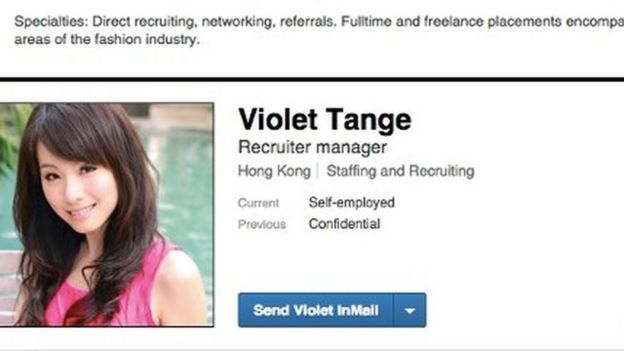
Posing as recruiters, the fake accounts allow hackers to map the networks of business professionals and gain the trust of those in them.
The security firm has worked with LinkedIn to remove all of the fake accounts it identified.
By making these connections, criminals can entice users to give up personal details, direct them to malware-laden websites and, if they can get their email addresses, launch spear-phishing campaigns - targeted emails that aim to steal personal information.
"LinkedIn users expect to be contacted by recruiters, so this ruse works out in the scammers' favour," it said in its report.
"Most of these fake accounts have been quite successful in gaining a significant network - one had 500 contacts. Some even managed to get endorsements from others," Symantec researcher Dick O'Brien told the BBC.
In response LinkedIn said: "We investigate suspected violations of our Terms of Service, including the creation of false profiles, and take immediate action when violations are uncovered.
We have a number of measures in place to confirm authenticity of profiles and remove those that are fake. We encourage members to utilise our Help Center to report inaccurate profiles and specific profile content to LinkedIn."
The researchers found that the fake profiles tended to be made up of text that had been copied and pasted from the profiles of real professionals. They used photos, often of women, pulled either from stock image sites or of real professionals.
They also used keywords such as "reservoir engineer", "exploration manager" and "cargo securement training" which are likely to gain them visibility via the site's built-in search engine.
Mr O'Brien had some tips for LinkedIn users worried that they might have befriended a hacker.
"You can do a reverse image search by dragging and dropping the profile picture into Google Images and see what it brings up.
"Copying and pasting the job information in Google can also reveal whether it has been taken from somewhere else."
Iranian hackers
Twitter and Facebook also have problems with fake accounts but LinkedIn seems to be particularly attractive to hackers, said Mr O'Brien.
"It reveals the greater sophistication of cyber-criminals that they are prepared to play the long game by gaining information for future attacks in this way," he said.
It is not the first time that researchers have pointed out the dangers of fake LinkedIn profiles.
In October, researchers from Dell's counter-threat unit identified a network of at least 25 fake profiles that had links to over 200 legitimate ones, belonging to people working in defence, telecommunications, government and utilities.
The fake accounts were linked back to an Iran-based hacker group.
Hacktivists operating under the Anonymous banner say they’ve gotten more than 5,000 Twitter accounts affiliated with the Islamic State knocked off the site since Friday.
We report that more than 5500 Twitter account of #ISIS are now #down! #OpParis #Anonymous #ExpectUs
— #OpParis (@opparisofficial) November 17, 2015
Anonymous anti-ISIS campaign is part of a broad attempt to make using the Internet harder for members of the terrorist group that’s claimed territory in Iraq and Syria. Anonymous offshoots have been hindering ISIS Twitter accounts for months, though many started or renewed their efforts after Friday, when an ISIS-affiliated group attacked Paris with guns and bombs, killing at least 129 people and injuring hundreds more.
Twitter has been a consistent recruiting ground for ISIS, which in January was estimated to have some 45,000 accounts, though it’s since somewhat moved to other social media sites, most notably Telegram. In a previous conversation with the Daily Dot, a Twitter spokesperson stressed that, like many sites, Twitter doesn’t actively monitor user content, and it instead relies on fellow users to report violent and abusive activity. In other words, concentrated efforts to identify and mass-report ISIS accounts is the best way to get them suspended.
In one message widely attributed to an Islamic State official channel, an ISIS member calls Anonymous “idiots” and encourages them to practice basic security online.
Anonymous has far more plans for ISIS than just disabling Twitter accounts, however. Various users who claim the designation say they’ll use distributed denial-of-service (DDoS) attacks to kick their sites offline with a flood of traffic. Others say they’re doxing—revealing personal information—of ISIS members to rebel groups fighting the militant jihadists in Syria.
In one message widely attributed to an Islamic State official channel, an ISIS member calls Anonymous “idiots” and encourages them to practice basic security online.
Anonymous has far more plans for ISIS than just disabling Twitter accounts, however. Various users who claim the designation say they’ll use distributed denial-of-service (DDoS) attacks to kick their sites offline with a flood of traffic. Others say they’re doxing—revealing personal information—of ISIS members to rebel groups fighting the militant jihadists in Syria.
The government's personnel agency announced Wednesday that it has hired a full-time cyber-security expert to help modernize its fleet of aged computer systems following a massive breach of US personnel records.
Clifton Triplett says his mission is twofold: To create a "new culture of security" at the Office of Personnel Management and upgrade some of the oldest information technology systems in government - quickly. He will serve as as the senior cyber and information technology adviser to the acting OPM Director Beth Cobert.
"Some of it's organizational," Triplett said in an interview before his new role was announced. "We need to create a new culture that [computer] security is part of our lives, and make sure our employees and contractors understand that." So if there is another potential intrusion by cyber thieves, "How do we react more rapidly?" Triplett said. "It's retooling to some extent, training the workforce and the organizational structure" of who does what.
Triplett, 57, who is moving to Washington from Houston, has built a reputation as a cyber-security and IT fix-it - and build-it -guy for the private sector, helping Fortune 200 companies in defense, telecommunications, oil field services, tractor, automotive and aerospace do what he's come to the government to do. A West Point graduate who attained the rank of major, he worked on computer security for almost a decade at the Defense Department.
In his new job, the stakes are particularly high. The breaches, which the Obama administration believes were carried out by the Chinese government, exposed the personal data of more than 22 million people in their employment and background investigation files. It included Social Security numbers, performance evaluations, and even the names of family members and friends who were listed as references on millions of applications for security clearances.
OPM, through a contractor, is notifying the victims that their information may have been compromised and offering them identity theft protections.
Now, the agency is focusing on how to permanently shore up its systems to prevent new attacks.
What made the systems so vulnerable is their age. "Let's go back to some of the route causes," Triplett said. "At the time these systems were created, the whole cyber threat was focused as something that might happen at defense or intelligence agencies, not a [human resources] system."
And those agencies addressed the threats much earlier, he said. But for an agency focused on human resources for federal employees, "The people who wrote the applications at the time. . . . This wasn't their forte," he said. "They wrote stuff that was for onboarding personnel records." It's the same problem a lot of companies have: "Legacy systems that were never designed with security in mind."
Since the breaches were discovered in recent months, OPM has put in place "many band-aids," Triplett said, as well as security fixes the agency says are permanent. Now the task is to install advanced security firewalls, continuous monitoring of its systems and other measures to prevent cyber-attacks.
Triplett said he is anxious to consult with the agency's inspector general, who has been critical of its efforts to upgrade its IT systems and who brought his concerns into the open at to numerous congressional hearings on the breaches.
Of course, modernizing these systems will be costly and require new funding from Congress, another battle in confronting cyber threats.
Closed-circuit security cameras are supposed to make you safer, but some malware is turning them into weapons. Researchers at Incapsula have discovered code that turned about 900 Linux-based CCTV cameras into a botnet, which promptly bombarded an unnamed "large cloud service" that serves millions of people.
The intruders compromised cameras from multiple brands, all of which had lax out-of-the-box security -- in some cases, they'd been hacked by more than one person.
The botnet conducted a "run of the mill" denial of service attack, and it would be relatively easy to thwart the attackers with a bit of caution. However, it underscores the potential dangers of security cameras.
There are millions of connected cams worldwide, many of which likely weren't installed properly -- and it'd be trivial to use those cameras to spy on people. Until companies either ship more secure cameras or tell their customers how to protect themselves, these surveillance systems will likely represent an ongoing risk.
WikiLeaks began posting what it claims are the contents of CIA Director John Brennan’s private email account on Wednesday, days after a teenager claimed to have hacked into his account.
The six initial emails posted by the anti-secrecy organization date from 2007 and 2008, and include personal information as well as draft versions of advice and policy positions.
Yesterday's Story :
The embarrassing CIA email hack situation just got a little worse for director John Brennan. Wikileaks claims it holds and will soon leak the contents of the emails found on the hacked account. WikiLeaks Twitter account has just announced an interesting new twist to the CIA hack case. According to a tweet issued around 12 p.m. EST, WikiLeaks is now in possession of documents from CIA Chief John Brennan’s hacked AOL email account and will soon be publishing the contents.
Additional documents will be posted “over the coming days,” WikiLeaks said, while claiming that Brennan used the account “occasionally for several intelligence related projects.” In a statement, CIA spokesman Dean Boyd did not dispute the authenticity of the leaked emails. “The hacking of the Brennan family account is a crime and the Brennan family is the victim,” Boyd said.
“The private electronic holdings of the Brennan family were plundered with malicious intent and are now being distributed across the web. This attack is something that could happen to anyone and should be condemned, not promoted. “There is no indication that any the documents released thus far are classified,” Boyd added. “In fact, they appear to be documents that a private citizen with national security interests and expertise would be expected to possess.”
Among the released documents is a draft version of Brennan’s security clearance questionnaire, which contains detailed information about his life and biography, including his passport number, home telephone number and a list of home addresses dating back to his childhood home in 1963. The document also contains Brennan’s wife’s Social Security number as well as birthdates, names and other information about close family members. The form, known as an SF86, is a common questionnaire for performing background checks of national security officials and contains information that could be personally compromising. The draft of a 2007 memo also contained in Brennan’s emails contains advice for the next president — who would be President Obama — about what to do with Iran. “Whoever takes up residence at 1600 Pennsylvania Avenue in January 2009 will need to ‘hit the ground running’ on Iran,” Brennan said in the draft memo. Talks between the U.S. and Iran “should not have a narrow focus,” Brennan added, given that its support for terrorism, nuclear ambitions and regional goals “are inextricably intertwined.”
The note is particularly striking given the Obama administration’s recent nuclear deal with Iran, which it has repeatedly said is a narrow agreement unrelated to Iran’s other activities. The memo also called for the White House to appoint an envoy to Iran. As possible candidates for the post, Brennan suggested former Secretaries of State Colin Powell and Madeline Albright, ex-Vice President Al Gore and former National Security Advisors Tony Lake and Brent Scowcroft. Another 2007 memo outlines how U.S. intelligence agencies need to “evolve” from their “Cold War roots.” Among other points, it calls for the head of the CIA and the director of national intelligence to be appointed for 10-year terms, which has not happened. A 2008 fax, meanwhile, outlines a legal dispute between the CIA and a defense contracting firm.
Also contained in the cache of leaked documents are a letter from former Sen. Kit Bond (R-Mo.) about brutal CIA interrogation methods often considered to be torture and the text of a 2008 bill to limit the interrogation program. The announcement follows the government’s admission that it was investigating reports that a high schooler had broken into Brennan’s personal AOL email account along with the Comcast account of Homeland Security Secretary Jeh Johnson. The hacker and their associates claim to have broken into Brennan’s account by posing as a Verizon worker and getting the company to reveal his personal information, according to Wired. Brennan’s account was broken into on Oct. 12, the hacker allegedly said.
According to reports, none of the documents obtained in the apparent hack contain classified information. FBI Director James Comey declined to answer reporters’ questions about the incident on Tuesday. CIA representatives did not respond to an inquiry about the leaked documents.