- Features: sleek metal body, Dual SIM
- Glass: Gorilla Glass 3
- Color Variants: Gun Metal Black
- Screen Size: 5.5” screen
- Dispaly: Quad HD display with 534 PPI
- Rear Camera: 21MP Sony IMX 230 Exmor (captuers 3D images, 86 degrees Field of View)
- Front Camera: 8MP front camera
- Processor: 1.95 GHz True Octa Core Helio X10 Processor
- RAM: 3 GB
- Battery: 3100mAh fast-charging Li-Po battery
- Storage: 32 GB
- Expandable Storage: 128GB
- Connectivity: 4 G
Showing posts with label sense. Show all posts
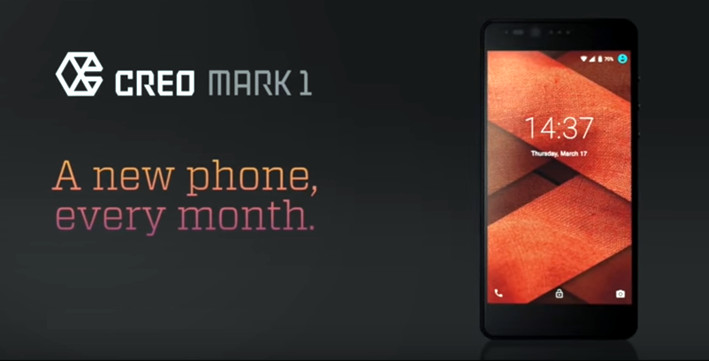
CREO, a Bangalore based Consumer Technology Company, unveiled its Android based Operating System- FUEL OS and smartphone- MARK 1. Fuel OS is proprietary product of CREO. Mark 1 uses Fuel OS as its operating system. The CREO Mark 1 devices will be available soon on the company’s official website (www.creosense.com) and on Flipkart for purchase at Rs. 19,999.
SPECIFICATIONS OF MARK 1
FEATURES/APPS OF FUEL OS
Retriever - The Retriever is to protect phone from theft. It automatically sends alerts to your Email ID if a new SIM is inserted into your device. It works even without internet connection and even after a factory reset.
Sense - Sense indexes everything from settings, apps, messages, contacts, photos, files to calendar events. So, when you want to find anything on your phone just double-tap on the home button from anywhere, and Sense will find it for you.
Echo - Echo answers your calls for you when you can't. SMS to people you care about; set your own greeting and let Echo greet your caller and record messages for you. It works without the Internet. Saving your money of SMS.
Smart Roaming for Dual Sim - Smart Roaming is primarily designed for travelers, it makes sure your local SIM is set as the primary SIM and the Roaming Sim is made your Secondary SIM.
Smart Forwarding - A feature that auto-diverts calls from ‘SIM 1’ to ‘SIM 2’ in your Phone and vice versa when the network on either of the SIM cards is unavailable or unreachable.
UPDATES FOR NEXT MONTH
For the first round of the updates on the CREO Mark 1, here are a few features to look forward to in the next update to be rolled out on 13th May, 2016:
· Photo Editor
· Selfie Screen Flash
· Automatic BKG Data Manager
· Auto & Customizable Echo
· Sense 2.0
As mobile and wearable devices such as smartwatches grow smaller, it gets tougher for people to interact with screens the size of a matchbook.
That could change with a new sonar technology developed by University of Washington computer scientists and electrical engineers that allows you to interact with mobile devices by writing or gesturing on any nearby surface -- a tabletop, a sheet of paper or even in mid-air.
FingerIO tracks fine-grained finger movements by turning a smartphone or smartwatch into an active sonar system using the device's own microphones and speakers.
Because sound waves travel through fabric and do not require a line of sight, users can even interact with a phone inside a front pocket or a smartwatch hidden under a sweater sleeve.
In a paper to be presented in May at the Association for Computing Machinery's CHI 2016 conference in San Jose, California, the UW team demonstrates that FingerIO can accurately track two-dimensional finger movements to within 8mm, which is sufficiently accurate to interact with today's mobile devices. The work was recognized with an honorable mention award by the conference.
"You can't type very easily onto a smartwatch display, so we wanted to transform a desk or any area around a device into an input surface," said lead author Rajalakshmi Nandakumar, a UW doctoral student in computer science and engineering. "I don't need to instrument my fingers with any other sensors -- I just use my finger to write something on a desk or any other surface and the device can track it with high resolution."
Using FingerIO, one could use the flick of a finger to turn up the volume, press a button, or scroll through menus on a smartphone without touching it, or even write a search command or text in the air rather than typing on a tiny screen.
FingerIO turns a smartwatch or smartphone into a sonar system using the device's own speaker to emit an inaudible sound wave. That signal bounces off the finger, and those "echoes" are recorded by the device's microphones and used to calculate the finger's location in space.
Using sound waves to track finger motion offers several advantages over cameras -- which don't work without line-of-sight when the device is hidden by fabric or another obstructions -- and other technologies like radar that require both custom sensor hardware and greater computing power, said senior author and UW assistant professor of computer science and engineering Shyam Gollakota.
"Acoustic signals are great -- because sound waves travel much slower than the radio waves used in radar, you don't need as much processing bandwidth so everything is simpler," said Gollakota, who directs the UW's Networks and Mobile Systems Lab. "And from a cost perspective, almost every device has a speaker and microphones so you can achieve this without any special hardware."
But sonar echoes are weak and typically not accurate enough to track finger motion at a high resolution. Errors of a few centimeters make it impossible to differentiate between writing individual letters or subtle hand gestures.
The UW researchers employed a type of signal typically used in wireless communication -- called Orthogonal Frequency Division Multiplexing -- and demonstrated that it can be used to achieve high-resolution finger tracking using sound. Their algorithms leverage the properties of OFDM signals to track phase changes in the echoes and correct for any errors in the finger location to achieve sub-centimeter finger tracking.
To test their approach, the researchers created a FingerIO prototype app for Android devices and downloaded it to an off-the-shelf Samsung Galaxy S4 smartphone and a smartwatch customized with two microphones, which are needed to track finger motion in two dimensions. Today's smartwatches typically only have one, which can be used to track a finger in one dimension.
The researchers asked testers to draw shapes such as stars, squiggles or figure 8s on a touchpad next to a smartphone or smartwatch running FingerIO. Then they compared the touchpad tracings to the shapes created by FingerIO's tracking.
The average difference between the drawings and the FingerIO tracings was 0.8 centimeters for the smartphone and 1.2 centimeters for the smartwatch.
"Given that your finger is already a centimeter thick, that's sufficient to accurately interact with the devices," said co-author and electrical engineering graduate student Vikram Iyer.
Next steps for the research team include demonstrating how FingerIO can be used to track multiple fingers moving at the same time, and extending its tracking abilities into three dimensions by adding additional microphones to the devices.
That could change with a new sonar technology developed by University of Washington computer scientists and electrical engineers that allows you to interact with mobile devices by writing or gesturing on any nearby surface -- a tabletop, a sheet of paper or even in mid-air.
FingerIO tracks fine-grained finger movements by turning a smartphone or smartwatch into an active sonar system using the device's own microphones and speakers.
Because sound waves travel through fabric and do not require a line of sight, users can even interact with a phone inside a front pocket or a smartwatch hidden under a sweater sleeve.
In a paper to be presented in May at the Association for Computing Machinery's CHI 2016 conference in San Jose, California, the UW team demonstrates that FingerIO can accurately track two-dimensional finger movements to within 8mm, which is sufficiently accurate to interact with today's mobile devices. The work was recognized with an honorable mention award by the conference.
"You can't type very easily onto a smartwatch display, so we wanted to transform a desk or any area around a device into an input surface," said lead author Rajalakshmi Nandakumar, a UW doctoral student in computer science and engineering. "I don't need to instrument my fingers with any other sensors -- I just use my finger to write something on a desk or any other surface and the device can track it with high resolution."
Using FingerIO, one could use the flick of a finger to turn up the volume, press a button, or scroll through menus on a smartphone without touching it, or even write a search command or text in the air rather than typing on a tiny screen.
FingerIO turns a smartwatch or smartphone into a sonar system using the device's own speaker to emit an inaudible sound wave. That signal bounces off the finger, and those "echoes" are recorded by the device's microphones and used to calculate the finger's location in space.
Using sound waves to track finger motion offers several advantages over cameras -- which don't work without line-of-sight when the device is hidden by fabric or another obstructions -- and other technologies like radar that require both custom sensor hardware and greater computing power, said senior author and UW assistant professor of computer science and engineering Shyam Gollakota.
"Acoustic signals are great -- because sound waves travel much slower than the radio waves used in radar, you don't need as much processing bandwidth so everything is simpler," said Gollakota, who directs the UW's Networks and Mobile Systems Lab. "And from a cost perspective, almost every device has a speaker and microphones so you can achieve this without any special hardware."
But sonar echoes are weak and typically not accurate enough to track finger motion at a high resolution. Errors of a few centimeters make it impossible to differentiate between writing individual letters or subtle hand gestures.
The UW researchers employed a type of signal typically used in wireless communication -- called Orthogonal Frequency Division Multiplexing -- and demonstrated that it can be used to achieve high-resolution finger tracking using sound. Their algorithms leverage the properties of OFDM signals to track phase changes in the echoes and correct for any errors in the finger location to achieve sub-centimeter finger tracking.
To test their approach, the researchers created a FingerIO prototype app for Android devices and downloaded it to an off-the-shelf Samsung Galaxy S4 smartphone and a smartwatch customized with two microphones, which are needed to track finger motion in two dimensions. Today's smartwatches typically only have one, which can be used to track a finger in one dimension.
The researchers asked testers to draw shapes such as stars, squiggles or figure 8s on a touchpad next to a smartphone or smartwatch running FingerIO. Then they compared the touchpad tracings to the shapes created by FingerIO's tracking.
The average difference between the drawings and the FingerIO tracings was 0.8 centimeters for the smartphone and 1.2 centimeters for the smartwatch.
"Given that your finger is already a centimeter thick, that's sufficient to accurately interact with the devices," said co-author and electrical engineering graduate student Vikram Iyer.
Next steps for the research team include demonstrating how FingerIO can be used to track multiple fingers moving at the same time, and extending its tracking abilities into three dimensions by adding additional microphones to the devices.

