Taiwanese consumer electronics giant Asus has launched two new laptops in India, the A540 and R558. The notebooks bear USB Type-C ports, are priced at Rs. 20,990 and Rs. 43,990 respectively.
Notably, both the laptops run on Free DOS, which means there is no pre-installed Windows 10 on board. Both sport a VGA webcam, a 1TB 5400RPM HDD, and SD card reader support. The laptops also come with one port each of USB 2.0, USB 3.0, and USB 3.1 Type-C.
Starting with the ASUS R558, it comes with a 15.6-inch full-HD (1920x1080 pixels) LED back-lit display. It is powered by a 2.3GHz Intel Core i5-6200U (2 cores, 4 threads, 2.8GHz Turbo frequency, 3MB SmartCache), 4GB of DDR4 RAM (upgradable to 8GB), Intel HD Graphics 520, and 2GB of DDR3 Nvidia GeForce 930MX (N16S-GMR). The notebook packs a 2-cell Li-ion battery pack. Other connectivity options on the laptop include a headphone and microphone combo jack, Ethernet port, VGA port, a HDMI 1.4 port, Wi-Fi 802.11 b/g/n, Bluetooth 4.1, and a DVD-RW drive. The Asus R558 is available in Black and Brown colour variants. It measures in at 382x256x25.5mm, and weighs 2.1 kilogrammes.
Coming to the Asus A540, the notebook features a 15.6-inch (1366x768 pixels) LED-backlit display. It is powered by a 1.7GHz Intel Core i3-4005U (2 cores, 4 threads, 3MB SmartCache) processor with Intel HD Graphics 4400. The notebook is paired with 4GB of DDR3 RAM (upgradable up to 8GB), and packs a 3-cell Li-ion battery pack. The Asus A540 will be available in Black and Silver colour variants. it measures in at 381x252x27.2, and weighs 2 kilogrammes with battery. It bears the same ports, connectivity options, and optical drive as the Asus R558.
Asus has recently also launched three Windows 10 laptops - namely, the ZenBook 3, Transformer 3 Pro, and Transformer 3- at its Zenvolution event in May. The event also saw the launch of the ZenFone 3, ZenFone 3 Deluxe, and ZenFone 3 Ultra smartphone - varying in different sizes and specifications. All three smartphones don a full metal design makeover, and fingerprint support embedded on the back of the phones. All the models sport an 8-megapixel selfie camera (85-degree wide-angle lens), and support hybrid dual-SIM slots. The rear cameras feature optical image stabilisation and electronic image stabilisation for better handheld photography.
For a closer view of the features must watch the following video :
About Asus:
ASUSTeK Computer Inc. is a Taiwanesemultinational computer hardware and electronics companyheadquartered in Beitou District, Taipei,Taiwan. Its products include desktops, laptops, netbooks, mobile phones, networking equipment, monitors, projectors,motherboards, graphics cards, optical storage, multimedia products, peripherals, wearables, servers, workstations, and tablet PCs.
Asus is the world's 4th-largest PC vendor by 2015 unit sales.Asus appears inBusinessWeek’s "InfoTech 100" and "Asia’s Top 10 IT Companies" rankings, and it ranked first in the IT Hardware category of the 2008 Taiwan Top 10 Global Brands survey with a total brand value of $1.3 billion.
Asus unveiled new products at the Computex trade show in Taipei on Monday, continuing its trend to launch new product at event. Asus launches three 2-in-1 hybrids - the Asus Transformer 3, Asus Transformer 3 Pro and ZenBook 3.
The Asus Transformer 3 (T305) has thin and sleek body with 6.9mm thickness weighing in at 695 grams. It is said to have 9 hours of battery life on single charge. It has 12.6-inch (2880x1920 pixels) screen and a screen brightness of 450 nits, making it a good option for outdoor use. It has 80 percent screen-to-body ratio, and a 121 percent SRGB gamut. Laptop comes with a full-size backlit Transformer Sleeve keyboard as well as a glass touchpad. It also has quad speaker support powered by Harman Kardon audio along with fingerprint reader and Windows Hello biometric authentication support, up to seventh generation Intel Core processors, up to a 512GB SSD, up to 8GB of RAM. The base model starts at $799 including the keyboard dock.
The Transformer 3 Pro version is slightly thicker then Transformer 3, it has 8.35mm thickness. It offers the same 12.6-inch (2880x1920 pixels) screen. It has Thunderbolt 3, full-size USB 3.0 port, and full size HDMI port. It also has 13MP rear-facing camera and backlit Cover Keyboard, as well as an Intel Core i7 processor and up to 16GB of RAM and up to a 1TB SSD. It also has a stylus with 1,024 pressure levels, a Bluetooth speaker accessory for quad speaker surround, and an external Nvidia GeForce GTX 1080 graphics card are also available. The Transformer 3 Pro starts at $999 including a keyboard and stylus pen.
TheZenBook 3 (UX390) is like clone of MacBook, it has 12.5 inch display weighs just two pounds. It also includes an Intel Core i7 processor and a 40Wh battery with a 9-hour single charge. It has 16GB of RAM, and 1TB PCIe x4 SSD is priced at $1,999. The Core i5 variant, with 4GB of RAM and a 256GB SSD, is priced at $999. It weighs in at 910 grams, measures 11.9mm in thickness, and sports a fingerprint reader. To put that in comparison, the MacBook is 13mm at its thickest point, and weighs in at 920 grams. It bears a Corning Gorilla Glass 4 panel. It will be available in Royal Blue, Quartz Grey, Rose Gold colours, and features a gold-backlit keyboard with twice the key travel of the MacBook.
Planning to buy a Wi-Fi router for your house, not sure which one is best for you. Here's some points/ things you should take care of before buying router.
1. The type of router you have to buy would depend on the type of connection you have subscribed for. Like if you will subscribe plans from your telephone service provider like MTNL, BSNL etc, then opt for an ADSL router. For connections where your service provider is your local cable operator, you will need a non-ADSL router.
2. Routers operating frequency is commonly 2.4GHz. Same range of frequency is also used for microwave ovens, cordless phones and Bluetooth devices. These devices if operate near router can cause network congestion and affect signal strength. So, opt for a dual-band router that supports 2.4 GHz, as well as 5GHz band. However, you will need to have compatible smartphones and laptops that can connect to this band while the rest operate over 2.4GHz.
3. The current 'ac' standard increases data transfer speeds up to three times more than the previous-generation 'n' standard. These routers are dual band by default, and are backward compatible with the 'n' standard, so your older devices will also work without any problem.
4. Before buying dongle don't forget to check if it supports these features: let you connect and share flash drives and printers over the network, accept 3G data dongles. However, these may work with specific brands only, so before buying, check if the router you've shortlisted supports the dongle you use.
5. Opt for routers with at least dual external antennas, as external antennas increase the overall range of router and are ideal for environments where you need access.
6. Always remember to check the device's specsheet or inquire at the store to confirm the USB port's function(s) so that it matches your requirements.
Dual Band: TP-Link TD-W8980 N600 (Rs 6,600), Netgear D3600 N600 (Rs 4,600). All these ADSL routers come with a USB port for file and printer sharing over a wireless network.
8. Single-band: Netgear JNR3210 N300 (Rs 2,500), D-Link DIR-615 (Rs 1,500), TP-Link TL-WR841N (Rs 1,200), Digisol DGHR3400 (Rs 1,100). Here, only the Netgear is equipped with a USB port.
Dual-band: TP-Link Archer C20 AC750 (Rs 2,200), Netgear JR6150 AC750 (Rs 4,200). Both these dual-band routers feature a USB port and the latest "ac" wireless standard for compatible devices.
As new academic year has already started, so children must have starting demanding new laptops according to their studies. Here is useful information for all parents. Now, no need to worry about up coming expenses. As many laptop models are available in market which won't burn hole in your pocket, in addition, these laptops have latest OS installed in them. Here's list of some which you can easily afford.
1. iBall CompBook Excelance: This is the latest full-fledged laptop. It cost Rs. 9,999 only. At such low cost, users get the latest Windows 10 OS along with 10,000 mAh battery and other features such as dual speakers, 2GB RAM, Intel quad-core processor and more.
2. Micromax Canvas Lapbook: The Micromax Canvas Lapbook is another laptop in budget which costs Rs 13,999 approx. The Windows 10 laptop is powered by an Intel Atom quad core processor. It has 32GB inbuilt storage with 2GB RAM and 11.6-inch display. The Canvas Lapbook also boasts dual speakers for surround sound effect.
3. Asus Eeebook: The Asus Eeebook costs around Rs 14,000. The device is powered by the Intel Atom quad-core processor. It has an 11.6inch display and comes with 32GB inbuilt storage.
4. HP Stream 13: The Windows-powered HP Stream 13 laptop comes at a price tag of around Rs 18,889. It also includes 32GB inbuilt storage with an Intel Celeron dual-core processor and houses a larger 13.3inch anti-glare display.
5. HP Pavilion 11: The HP Pavilion 11 is a worth buying laptop, which I personally advice is the best laptop. It has Windows 10 OS that comes at a price tag of around Rs. 20,000. The computing device is powered by an Intel Celeron dual core processor and 2GB of RAM. It includes 500GB of inbuilt storage and has 11.6inch display.
6. iBall CompBook Exemplaire: The iBall CompBook Exemplaire includes a 14 inch display along with, 2GB RAM, Intel quad-core processor and a massive 10,000mAh battery. It also makes it in the cheapest Windows 10 laptop list as it is pricedat Rs. 13,999.
Asus ramped up it’s Republic of Gamers’ (ROG) roster with the launch of gaming laptops and desktops.
The most interesting launch by Asus on Wednesday has to be the ROG G501VW that features an NVidia GTX960M Graphics while rocking a 2 cm slim and just 2 kilogram heavy in a metallic body. It supports up to 4K/UHD visuals and on the 4K display complimented by SonicMaster audio enhancement. It packs 16GB DDR4 RAM and up to a next gen 512 GB SSD storage. It was launched at a price of Rs 95,490.
“Gaming technology is always evolving as a gaming enthusiast is always looking for upgrading or enhancing their systems. Today, along with high performance and graphics, gamers also want their machines to be portable and light-weight. With our new ROG series launch, we have tried our best to cater to the demands of all the gaming segments i.e. from entry and mainstream levels to professional gaming. It has always been our endeavor to provide the best gaming experience to the users and ultimately help the gaming industry in India to thrive,” said Peter Chang, Regional Head - South Asia & Country Manager.
The gaming desktop, ROG GT51 launched at Rs 3,25,900 looks like an intimidating piece of machinery and boast of scoring CES Innovation Award in the Gaming and Virtual Reality category courtesy of the monstrous specification. There’s also a cheaper option for Rs 1,22,990, in the form of ROG G20CB. You want to pick these gaming beast up from Asus’ stores starting this week.
The company also launched ROG G752VY (Rs 1,79,990), GL552VW (Rs 82,490) and G551VW (Rs 1,00,490) laptops.
Stay tune with us, we will bring detail review of these devices as soon as possible.
What do you think about these devices, do you think this product will be successful , comment your onion on comment section below
HP's new Spectre 13.3-inch laptop, running Windows 10, is launched in market and it only weighs 2.45 pounds. At 0.4 of an inch thick. It's also the world's thinnest laptop. The Spectre looks like a piece of jewelry that belongs in a high-end fashion store.
The "Ash Silver" laptop's hood and body are made of sturdy aluminum, and its base is made from lightweight carbon fiber. The copper-polished hinge, inspired by cabinet door hinges, helps make the display appear like it's floating above the keyboard.
Instead of a fanless Intel Core M processor, HP's going with a sixth-gen Core i5 or i7 processor (depending on configuration) with 8GB of RAM. HP says it's using Intel's hyperbaric cooling system, which uses two fans to suck in air and then redirect them over the processor and other vital components to keep the laptop cool.
The 13.3-inch IPS display is full HD resolution (1,920 x 1,080), but there's no 4K display option. Surprisingly, the display isn't a touchscreen, and there's no option to get one. The IPS screen still looks sharp from a working distance and while a touchscreen and 4K would have been nice, it also would mean getting lower battery life.
On the back of the laptop are three USB Type-C ports and a 3.5mm headphone jack. All three of the USB-C ports can be used to charge the Spectre 13.3, output video and transfer data.
HP claims Spectre 13.3 to have 9 hours and 45 minutes of battery life. To achieve that, it combined four batteries together, maximizing every bit of space within the thin chassis.
Pre-orders for the new Spectre are available at HP and Best Buy beginning on April 25.
Smartron, India’s first true global IoT brand with “designed and engineered” in India for India and the world, today announced the launch of its first ever range of products, t.book, the impressive high performance Ultrabook convertible.
Specifications: The tBook has a metal body construction; specifically, it uses a mixture of magnesium and aluminum. With a beautiful finish on every edge and corner, the hybrid tablet looks pretty neat and clean. The combination of Smartron Orange and Grey color on the back side, it looks beautiful. And what’s look nicer is the kickback stand. With a price point it comes with, one would think that build quality of the stand wouldn’t be sturdy, well, I’ll stop you right there.
The Kickback stand is pretty stable; you feel the solid body when you pull it out from the space assigned to it. Edges have dedicated keys and ports, such as power button, 3.5mm audio jack, microSD card slot, Type-C with USB 3.0 support, 2 X full USB 3.0 ports, micro HDMI port, and a magnetic pogo pin on the bottom edge, which is used to attach the keyboard. As well as you would see dual stereo speakers and dual microphone for better noise cancellation during those conference calls. With a dimension of 308.5 x 9.5 x 206.5 mm, the tablet feels to hold and offer an excellent grip. It felt light enough to carry around in your backpack.
Keyboard: keyboard, comes as an attachable accessory that you can use when you want to browse comfortably . It’s always good to get an attachable keyboard to use when typing is all you need. And before you ask, it’s a full-size keyboard, which we thought needs some work. But I can judge more about it once we use it as our daily driver machine, which we are hoping to in near future.
Display: Moving to the display, it has 12.2-inch WQXGA display with IPS technology and a resolution of 2560 x 1600, which is as better as it gets on a size that large. We didn’t get to play videos on it, but the system colors felt pretty good on it, just a couple of minutes of browsing will tell you that how clear the display is, as well it has good viewing angles too. With a 16:10 ratio, the content on this display is as wide as it gets, the multi-touch certainly felt responsive with
couple try, as well as the company is claiming that it as a fingerprint-resistant oleophobic coating. tbook, sports a 12.2-inch IPS display with WQXGA (2560 x 1600 pixels) resolution. It is powered by the 64-bit Intel Core M processors clocked at 2GHz. There is 4GB of RAM, 128GB of SSD storage, and a MicroSD card slot for storage expansion.
The tbook is backed by a 37W.hr battery which the company claims to last for 10 hours of continuous usage. On the connectivity front, it has two USB 3.0 ports, one Micro-HDMI, and one Type C with USB 3.0 for charging. Even though the tablet is powered off, it can be still used for charging other devices. The tablet packs two 1W stereo speakers and dual microphones for noise cancellation.
In the camera department, it includes 5MP autofocus rear camera and a 2MP front camera. It measures 308.5 x 206.5 x 9.5 mm. It also comes with the T-Care shortcut for remotely fixing the problems within the tablet. While the tbook will be on sale starting from April 8th via Gadgets 360 and the tphone will be launched on April 18th.
The device is powered by Intel Core M processor, which is said to be next generation chipset bringing the best efficiency in terms of power usage and performance. That’s why the company is claiming a battery life of up to 10 hours in web browsing while a 28 days standby time, which is something of an amazing feat. But then again, we would only know it better once we get started on using tBook as our daily driver machine.
The processor offers turbo frequency if up to 2GHz, it is supported by a 128Gb SSD drive, which said to be numerous times faster than HDD. Moreover, there is a 4GB of LPDDR3 RAM inside the system, which ensures swift multitasking. It would be coming with Windows 10 Home, which can be upgraded to Windows 10 Pro as well as would come pre-installed with 30 days trial version of Office 2016 Edition.
Apart from all this, the company has created a Tron X, which is all set to deliver software experience with t-cloud, t-store, and t-care. This all is listed under the Hubtron, company’s native artificial engine integrated on every smartron device. With this users would be able to access their data, profiles, content, services, and community. We can’t explain how useful these features are yet as we haven’t tested them yet. That said we are certainly looking forward to it. It’s all a lot to take in at the time, but one can make sense of these services once they use this service.
The idea of owning a portable, powerful hybrid machine would be accessible to more consumers as Smartron tBook priced at Rs 39,999 is something that many consumers would be interested in to get their hands-on with. The specifications on this tablet are very promising; from design to display, enough number of ports to an array of hubtron services and performance to battery life. This was our first impression of the Smartron tBook hybrid tablet. For detailed review Stay tuned with us.
New Delhi,March 31 : Smartron, India’s first true global IoT brand with “designed and engineered” in India for India and the world, today announced the launch of its first ever range of products, t.book, the impressive high performance Ultrabook convertible, t.phone, the lightest 5.5” Smartphone, and tron.x, its unique Smartron experience. On the occasion, Sachin Tendulkar legendary cricketer, shareholder and brand ambassador of Smartron along with Mahesh Lingareddy, Founder & Chairman unveiled these devices, platforms and services in the presence Narsi Reddy, Co-Founder & Managing Director, Rohit Rathi, Co- Founder & President, Smartron and its global partners, customers and vendors.
These next generation of smart IoT devices, platforms and services from Smartron are built on the breakthrough concept of Internet of TronsTM (IoT) to deliver truly amazing “tron xperience” for the discerning customer at home or on the go or at office or in the car. Tron.x seamlessly integrates all the devices, software, cloud, crowd, hub, services and care platforms to deliver highly intelligent and personalized experience through hubtron. Hubtron comes with every Smartron device and customer can access all his or her profile, data like documents, content like pictures and music, services like professional and payment, care, community as well as can manage all other IoT devices
Smartron t.book, the perfect mobile workstation is priced at Rs 39,999/-(including keyboard) will go on sale exclusively on Gadget360.com starting April 8th, 2016 and the t.phone booking will start on April 18th, 2016. All Smartron devices come with hubtron to enjoy the amazing tron xperience (tron.x).
Smartron believes that it is the right time to size up the opportunity of Internet of Things (IoT) and design products in India with an impressive technology for a global audience. Positioned as “We are Engineers at Heart” “building Smart things to life” Smartron aims to create a network of integrated smart devices for seamless communication.
Speaking on the occasion, Sachin said, “We are moving towards Internet driven experiences and Smartron’s vision in unlocking the potential of IoT will bring compelling experiences to people, making their life more productive, safe, intelligent and convenient. An Indian brand making a great leap into technology product innovation is commendable. I am delighted to be associated with Smartron, a global technology brand from India.”
Speaking at the launch, Mahesh said, ‘The success formula for making India globally competitive and respected is to ensure a holistic approach to the products and services and ensure they go hand-in-hand. Realizing the need for developing products and global brands from India for a global market, Smartron aims at innovating in this sphere’’.
On the product line up, he further said, “we have an exciting line up of products for 2016, beyond smartphone and ultrabook segments across mobile, home, auto, enterprise and infrastructure markets. Our aim is to make customer’s life simpler, smarter, and safer using Smartron products”.
Smartron commissioned its operations in Hyderabad and Bengaluru in August 2014. The company has so far invested over $10 Million to support the R&D activities and plans to spend $ 100 million over the next couple of years to establish Smartron as a global brand. Striving to innovate in the smart devices and IoT segment, the launch of the first two products, t.book and t.phone coupled with tron.x is the first step towards achieving this goal.
Powered by Intel® Core™ M processor and a Microsoft Windows 10 Operating System, the t.book aims at enhancing the user experience. The device comes with Hubtron, a one-stop destination to access all the data, content, services and care and to shop for all other devices and accessories and to be participate in the community and to enjoy the amazing tron xperience. Hubtron will be active across all Smartron devices. Apart from this, the t.cloud feature will enable Smartron users with free unlimited storage and the data can be accessed across all devices using Hubtron. The Smartron customer service, which is known as t.care, will offer online and offline support. The offline support will be present across 100 cities and with doorstep services making it hassle free.
The premium built t.phone is designed to be the world’s lightest 5.5” smartphone. More details will be announced in a separate event in April 3rd week this year.
About Smartron
Led by experienced management and passionate engineering teams and funded by investors from US, India, Middle East and others, Smartron started as a global organization from day one with R&D centres in Hyderabad and Bengaluru and teams around the globe to enable global technology sourcing, marketing and sales. Smartron has been working closely with vendors, partners and customers to co-create and collaborate in building a strong product ecosystem.
The Twinpad comes with a detachable keyboard with trackpad.
Lava has announced the launch of Lava Twinpad, a 2-in-1 tablet, at Rs 15,999. Being a hybrid device, it can be used both as a tablet and a laptop. The screen of the device can be placed on the front as well as on the reverse side and also comes with a detachable keyboard with track-pad.
As per Lava, the Twinpad will be available in silver colour across all national retail stores, multi-brand outlets and onlinePLATFORMS. It comes with a one-year manufacturer warranty and 6 months warranty for the in box accessories.
Lava Twinpad has a 10.1-inch IPS display with Stylus support, 800x1280 pixels resolution and 5-Point multi-touch support. It is powered by a 1.3 GHz quad-core Intel processor paired with 2GB of RAM. The device runs on Windows 10 operating system and is backed up by a huge 7400 mAh battery.
The Twinpad has 32 GB of inbuilt storage, which can be further expandable up-to 64GB via microSD card. It sports a 2-megapixel camera both in front & back panel. Besides, the Twinpad offers Single SIM, 3G, Wi-Fi, Bluetooth 4.0, 2 USB Slots and a 3.5mm headphone jack.
Commenting on the launch of Twinpad, Raman Sharma, vice-president & business head tablets, Lava International Limited said, "In India, tablets as a category is still evolving but at the same time lines are blurring between phablets and tablets. At Lava, we are constantly investing in R&D to bring innovative yet relevant devices for the consumers. In Twinpad we have come up with a device that offers great computing functionalities and therefore finds a right fit with students & young working executives who are always on the move. The overall proposition led by dual functionality & a bidirectional screen will redefine benchmarks in this category."
Laptops had a banner year in 2015, and all signs point to an even better selection in 2016. It’s also potentially a more confusing one, too: There’s an ever-growing number of choices to navigate. Picking your form factor (traditional, 2-in-1, or convertible) only begins your run through a gauntlet of decisions.
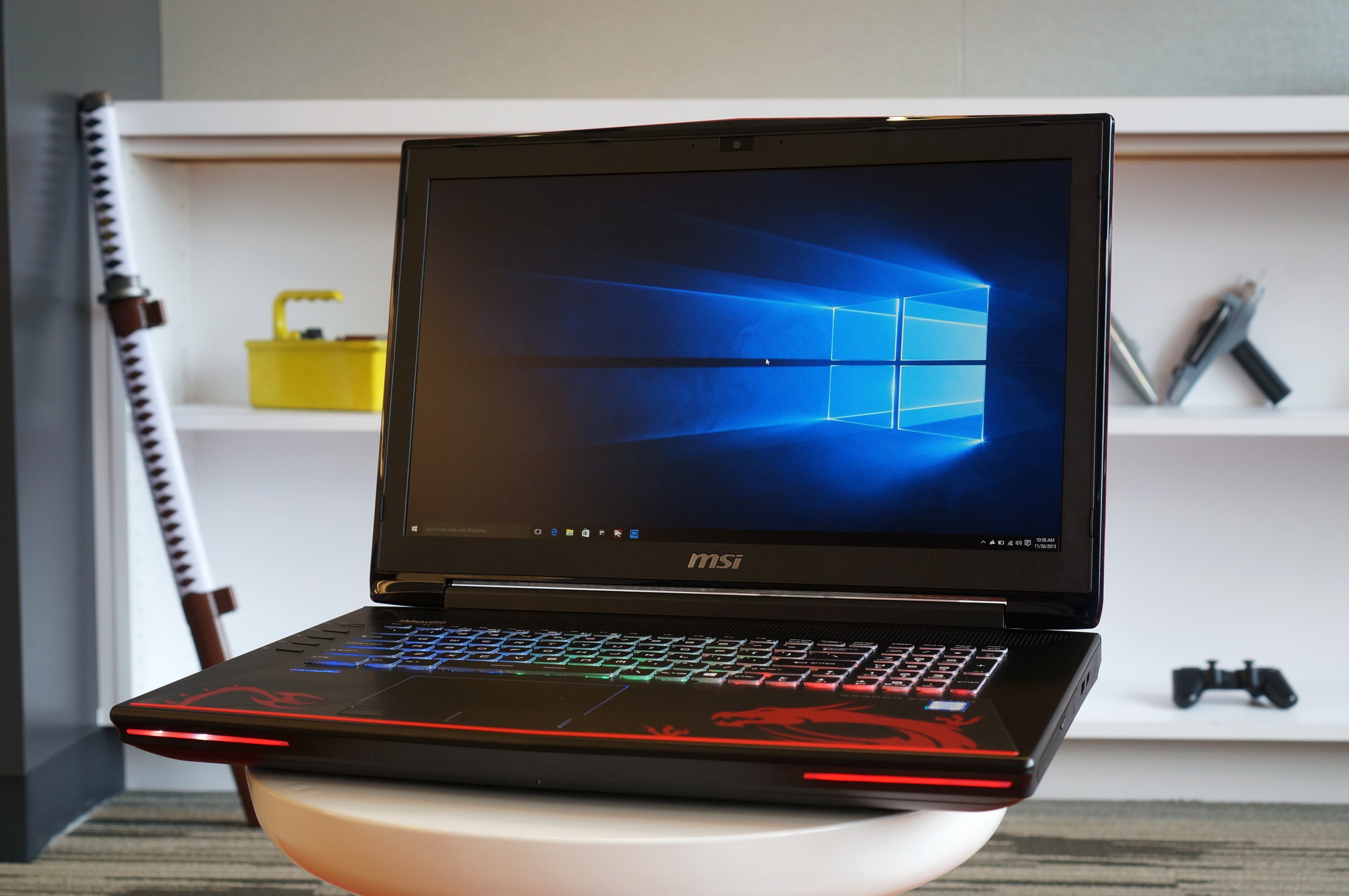
But whether you’re trying to choose between old stock featuring Intel’s 5th-gen Broadwell processors and new models sporting 6th-gen Skylake hardware, or hunting for a worthwhile luxury laptop, it promises to be a great year for anyone buying a new system. To help you with your decision, we’ve rounded up our top picks from all the current laptops out right now, with newly crowned winners for Best Budget Surface Clone (HP's Spectre x2) and Best Gaming Laptop (MSI's GT72S Dominator Pro G Dragon).
Best Ultrabook: Dell XPS 13
Dell’s XPS 13 packs a big display into a tiny form factor and is arguably the best Ultrabook of the year.
We’ve had a long time to think about this one, and Dell's XPS 13 gets the well-deserved pick for the best Ultrabook. Its aluminum exterior and carbon fiber top exude quality. The most innovative leap forward is its “InfinityEdge” display—that’s a fancy way of saying it has nearly no bezel. This lets Dell pack a 13-inch screen into the body of a laptop that’s not much bigger than a typical 11-inch laptop.
The XPS 13 has consistently been one of the faster Ultrabooks we’ve seen, our benchmark against which all others have been judged. Most of our experience is based on the previous Intel Broadwell iteration, which Dell still sells, but it’s now being supplanted with Intel’s newer Skylake CPUs.
If we had to complain about anything, it would the small keyboard. It’s far from being a deal-breaker, but we wish the keys were just a little bigger.
We have the updated XPS 13 in-house for review. So far we can say it’s incrementally faster thanks to the Skylake CPU and its full PCIe SSD. Regardless of the generation, you can’t lose with the XPS 13, a truly compact Ultrabook with a screen that punches out of its class.
Best 2-in-1 laptop: HP Spectre x360
HP’s Spectre x360 is beautiful and easily the best 2-in-1 laptop of the year.
HP's Spectre x360 is our pick for the best 2-in-1 Ultrabook, and a close competitor to Dell's XPS 13. With a body milled out of solid aluminum, the Spectre x360 is beautiful and talented—you can flip the screen around for tablet mode or tent mode when needed. The Spectre x360's keyboard is luxurious next to the cramped Dell XPS 13 too, but the HP laptop is also wider as a result.
Performance is top-notch, but we took issue with HP’s decision to control thermals by throttling CPU speed. HP has since updated its BIOS to keep the performance ticking along under heavier loads. The cost is slightly more fan noise, but you get the performance you’re paying for. You also get great audio, awesome battery life, and touch support on all models.We have high hopes for the Skylake model that's coming down the pike.
Best Budget Ultrabook: Asus UX305
Asus gives you a ton of value for the money and arguably the best budget ultrabook.
Enter Asus’ UX305, the best budget Ultrabook in town. It packs in 8GB of RAM and a 256GB SSD for the low price of $700. You’d think Asus would skimp in build quality or sneak in a lousy screen, but it didn’t. The body is aluminum, and the display is a 1920x1080 IPS screen with anti-glare finish. It’s also one of the thinnest Ultrabooks today, at roughly 12mm thick and weighing just 2.6 pounds.
The CPU isn’t a Core i5-class, but rather than step down to Atom, Asus stepped sideways, with Intel’s Core M in the original UX305 and the new Core m3 in the updated UX305. We’re actually in the middle of testing the updated Core m3 UX305. The early results say it’s comparable in every way except perhaps performance.
There are some compromises. There’s no backlighting on the keyboard, which is pretty standard in any Ultrabook today. The trackpad, while not horrible, is a tad bit springy. Still, it's one hell of a deal in a price range that usually nets you thick, ugly and plastic.
Best luxury laptop: Microsoft Surface Book
Microsoft’s Surface Book is expensive but fast and unique, and a radical re-thinking of a laptop.
There’s no way to describe Microsoft's Surface Book as anything but a luxury item. The configuration you want—the one with the GPU under the keyboard—isn’t even available until you slam $1,900 onto Satya Nadella’s desk. But what you get is glorious.
Start with the beautiful, high-resolution 13.5-inch screen, a discrete GeForce option, Skylake dual-core and exceptional battery life. That you can remove the screen to use as a tablet—err, clipboard—with the included pen is just a major bonus.
Performance in general is near the top of the heap. On graphics loads, including video-accelerated encoding, it can’t be touched by anything in its class.
Those who can afford it are going to get what they want: a beautiful laptop that’ll probably start conversations in the first-class cabin as you fly from Dubai to London.
Best Surface: Microsoft Surface Pro 4
The Surface Pro 4 is an evolved Surface Pro 3 and better in everyway.
We know, you think we’re biased with a category named “Best Surface,” but Microsoft’s Surface series is really an evolutionary step beyond the typical “convertible” devices that physically separate from the keyboard to run independently as tablets. Surface clones have arisen that are also light, yet still very capable: Lenovo has its new Miix 700, HP has its Spectre 12 X2. We expect the clone wars to keep heating up in the coming months.
The best one today, however, is the Surface Pro 4. It has a top-rated display, great performance, and its keyboard and trackpad are miles ahead of competing designs (*cough* iPad Pro). We choose it over the Surface Pro 3 for its performance and better thermals (with less fan noise) compared to the older model.
The only caveat: It’s expensive—and the essential keyboard adds $130 to the price. That means the mid-range Surface Pro 4 with 256GB of storage, 8GB of RAM and Core i5 is a $1,430 computer. Ouch.
Still, for those who really valuable portability (it really is laptop performance in a tablet) and will actually use it as a tablet on occasion, you’d be hard pressed to beat the Surface Pro 4 today.
Best Budget Surface Clone: HP Spectre x2
The kickstand on the Spectre x2 folds back to 150 degrees and pops out with a switch.
If you’re thinking that the Surface 3 is the Surface Pro 4's affordable alternative, think again. For $800, HP's Spectre x2 gives you 128GB of storage, 4GB of RAM, and Intel’s Core m3 series—the company’s latest Skylake CPU, tuned for low power. It’s also LTE-ready, so you can easily add it to your cellular plan for untethered working (that’s a $100 option for the Surface 3). Oh yeah, and you get the keyboard, too.
That's a heck of a package, especially given that a comparable Surface 3 bundled with its optional type cover costs $830—and sports an Atom processor. About the only places that the Surface 3 shines are in battery life and portability: The Spectre x2 died a little more than an hour sooner in our battery rundown test, and it's well over a half-pound heavier.
But the Spectre x2's larger display and solid performance put it far ahead of the Surface 3 for office and home tasks. Relative to the Surface Pro 4, there are compromises it makes in the display (which has a larger bezel, skews blue, and is slightly less bright), as well as with its kickstand design, but you still get tremendous bang for your buck.
Best Gaming Laptop: MSI GT72S Dominator Pro G Dragon
MSI’s GT72S Dominator Pro G Dragon features a G-Sync panel and GeForce GTX 980 card.
We love our desktop gaming rigs, but there are times when a full-tilt boogie semi-portable laptop just makes more sense. Take the MSI GT72S Dominator Pro G Dragon, which packs a GeForce GTX 980—Nvidia’s top-dog GPU for laptops that offers 1:1 performance with its desktop counterpart. Yes, you read that right. A laptop that performs every bit as fast as a top-of-the-line gaming desktop rig with a $550 GPU in it. In fact, our review unit even slightly outperformed the desktop we compared it against.
But the MSI GT72S Dragon isn't just a one-trick pony. Across the board, it held its own against comparable desktop systems, and even edged out the desktops in certain tasks when we overclocked its Core i7-6820HK processor from 3.2GHz to 4.0GHz.
The only drawback to this system isn't its weight, though with a 17.3-inch IPS panel it's certainly heavy. Our review model pushes $3,100, thanks to its quad-core Skylake CPU and G-Sync 75Hz display. MSI throws in a free backpack to lessen that price tag’s sting, and honestly, a comparable desktop setup isn’t astronomically cheaper—but it's still a good chunk of cash. You get what you pay for, though, and that’s true desktop performance in a laptop.
Best high-end Chromebook: Dell Chromebook 13
Dell's Chromebook 13 is the first built expressly for business, with a wide range of configurations and prices from $399 to $899.
The best Chromebook in someone's dreams is the Chromebook Pixel. For the rest of us, Dell's new Chromebook 13 is attainable and a noticeable cut above most other models.
Whereas many lower-end Chromebooks feel like toys, the Chromebook 13 is made for grown-ups. Its build includes a tough carbon-fiber lid with a rubber gasket for even more durability. It houses a 13.3-inch, 1920x1080 IPS display—either anti-glare (as with the unit we're testing), or a Gorilla Glass touchscreen. Inside the magnesium-alloy body you'll find a Broadwell Celeron CPU. Our review unit's Celeron 3205U is looking peppy in our performance tests, and battery life seems close to Dell's promise of 12-13 hours.
Dell's Chromebook 13 is no bargain at $429 as configured. We know most people like Chromebooks costing $300 or even far less. For a category that's hitting its stride, however, with growth in education and the enterprise, the Chromebook 13 is a laptop that looks and acts like it means business.
Best low-end Chromebook: Asus Chromebook Flip
The Asus Chromebook Flip has a 360-degree hinge and will take advantage of upgrades to Chrome OS specifically to improve the touch UI.
We have low-end Chromebooks to thank for bringing web productivity to the masses—budget-minded individuals, and of course, cost-conscious schools. The cheapest model we've seen, the Hisense Chromebook at Wal-Mart, costs just $149. Go there if you want or need to, but our pick for the best low-end model is a little more expensive—and a lot more versatile. That would be the Asus Chromebook Flip, the first mainstream Chromebook convertible and a solid deal at $249.
The Flip boasts an aluminum chassis and a superior-quality IPS touchscreen display. Granted, that display is a diminutive 10.1 inches compared to the 11-or-so inches you'll get with other units in this price range, but that's a tradeoff for the machine's 360-degree talents. A low-power Rockchip 3288 CPU helps keep the Chromebook Flip in bargain territory—and saves on battery life, which we clocked at over ten hours.
Scientists have developed a miniaturized laboratory, called Chemical Laptop, that could be used to search for signs of life outside Earth.
If you were looking for the signatures of life on another world, you would want to take something small and portable with you. That’s the philosophy behind the “Chemical Laptop” being developed at NASA’s Jet Propulsion Laboratory in Pasadena, California: a miniaturized laboratory that analyzes samples for materials associated with life.
“If this instrument were to be sent to space, it would be the most sensitive device of its kind to leave Earth, and the first to be able to look for both amino acids and fatty acids,” said Jessica Creamer, a NASA postdoctoral fellow based at JPL.
Like a tricorder from “Star Trek,” the Chemical Laptop is a miniaturized on-the-go laboratory, which researchers hope to send one day to another planetary body such as Mars or Europa. It is roughly the size of a regular computing laptop, but much thicker to make room for chemical analysis components inside. But unlike a tricorder, it has to ingest a sample to analyze it.
“Our device is a chemical analyzer that can be reprogrammed like a laptop to perform different functions,” said Fernanda Mora, a JPL technologist who is developing the instrument with JPL’s Peter Willis, the project’s principal investigator. “As on a regular laptop, we have different apps for different analyses like amino acids and fatty acids.”
Amino acids are building blocks of proteins, while fatty acids are key components of cell membranes. Both are essential to life, but can also be found in non-life sources. The Chemical Laptop may be able to tell the difference.
What it’s looking for
Amino acids come in two types: Left-handed and right-handed. Like the left and right hands of a person, these amino acids are mirror images of each other but contain the same components. Some scientists hypothesize that life on Earth evolved to use just left-handed amino acids because that standard was adopted early in life’s history, sort of like the way VHS became the standard for video instead of Betamax in the 1980s. It’s possible that life on other worlds might use the right-handed kind.
“If a test found a 50-50 mixture of left-handed and right-handed amino acids, we could conclude that the sample was probably not of biological origin,” Creamer said. “But if we were to find an excess of either left or right, that would be the golden ticket. That would be the best evidence so far that life exists on other planets.”
The analysis of amino acids is particularly challenging because the left- and right-handed versions are equal in size and electric charge. Even more challenging is developing a method that can look for all the amino acids in a single analysis.
When the laptop is set to look for fatty acids, scientists are most interested in the length of the acids’ carbon chain. This is an indication of what organisms are or were present.
How it works
The battery-powered Chemical Laptop needs a liquid sample to analyze, which is more difficult to obtain on a planetary body such as Mars. The group collaborated with JPL’s Luther Beegle to incorporate an “espresso machine” technology, in which the sample is put into a tube with liquid water and heated to above 212 degrees Fahrenheit (100 degrees Celsius). The water then comes out carrying the organic molecules with it. The Sample Analysis at Mars (SAM) instrument suite on NASA’s Mars Curiosity rover utilizes a similar principle, but it uses heat without water.
Once the water sample is fed into the Chemical Laptop, the device prepares the sample by mixing it with a fluorescent dye, which attaches the dye to the amino acids or fatty acids. The sample then flows into a microchip inside the device, where the amino acids or fatty acids can be separated from one another. At the end of the separation channel is a detection laser. The dye allows researchers see a signal corresponding to the amino acids or fatty acids when they pass the laser.
Inside a “separation channel” of the microchip, there are already chemical additives that mix with the sample. Some of these species will only interact with right-handed amino acids, and some will only interact with the left-handed variety. These additives will change the relative amount of time the left and right-handed amino acids are in the separation channel, allowing scientists to determine the “handedness” of amino acids in the sample.
Testing for future uses
Last year the researchers did a field test at JPL’s Mars Yard, where they placed the Chemical Laptop on a test rover.
“This was the first time we showed the instrument works outside of the laboratory setting. This is the first step toward demonstrating a totally portable and automated instrument that can operate in the field,” said Mora.
For this test, the laptop analyzed a sample of “green rust,” a mineral that absorbs organic molecules in its layers and may be significant in the origin of life, said JPL’s Michael Russell, who helped provide the sample.
“One ultimate goal is to put a detector like this on a spacecraft such as a Mars rover, so for our first test outside the lab we literally did that,” said Willis.
Since then, Mora has been working to improve the sensitivity of the Chemical Laptop so it can detect even smaller amounts of amino acids or fatty acids. Currently, the instrument can detect concentrations as low as parts per trillion. Mora is currently testing a new laser and detector technology.
Coming up is a test in the Atacama Desert in Chile, with collaboration from NASA’s Ames Research Center, Moffett Field, California, through a grant from NASA’s Planetary Science & Technology Through Analog Research (PSTAR) program.
“This could also be an especially useful tool for icy-worlds targets such as Enceladus and Europa. All you would need to do is melt a little bit of the ice, and you could sample it and analyze it directly,” Creamer said.
The Chemical Laptop technology has applications for Earth, too. It could be used for environmental monitoring — analyzing samples directly in the field, rather than taking them back to a laboratory. Uses for medicine could include testing whether the contents of drugs are legitimate or counterfeit.
Creamer recently won an award for her work in this area at JPL’s Postdoc Research Day Poster Session.
NASA’s PICASSO program, part of the agency’s Science Mission Directorate in Washington, supported this research. The California Institute of Technology in Pasadena manages JPL for NASA.
By just looking at it, you would think Samsung is starting a competition against Microsoft's Surface Book.
In a recent report from TechRadar, Samsung has finally broken their silence on the laptop line by introducing their own version, which is the Samsung Ativ Book 9 Spin. Looking at it, the latest device from the South Korean tech giant has a stunning design concept with an ultra thin profile. If this is their entry in hopes of toppling Microsoft's Surface Book and Surface Pro 4, they just might succeed in it.
The convertible laptop is said to have a 13.3-inch 3,200 x 1,800 screen display. Compared to Microsoft's Surface Book, the QHD+ resolution of the Samsung Ativ Book 9 Spin has a better resolution. It also has a lighter profile than that of the Surface Book.
Measuring its weight and dimension, the Samsung Spin weighs around 2.87 pounds with an amazing thinness of only 0.59 inches. Considering these measurements, you might worry about its battery specs. But fret not, as the Samsung Spin's battery can last up to 7.3 hours of continuous usage.
It might not have the detachable monitor feature as boasted by the Surface Book, but its subtle hinges show a nice concept of a convertible laptop. The Samsung Ativ Book 9 Spin is powered by an Intel Core i7 6500U processor with 8GB of RAM and 256GB of SSD.
For those contemplating on buying one, expect to shed around $1,399 for the Samsung Ativ Book 9 Spin. If you wish for more choices like that of Microsoft's Surface line, Samsung is also working on the release of its Samsung Ativ Book 9 Pro, which has a bigger screen and resolution.
The Verge notes that the Ativ Book 9 Pro will sport a 15.5-inch touchscreen display with an Intel Core i7 processor. Not much differentiates the two, but their significant physical profiles set them apart.The two devices are also differnt in terms of weight and dimensions.
The Samsung Ativ Book 9 Pro boasts 8GB of RAM, 256GB of SSD with the processor running at 2.6GHz. The high-resolution screen of the Ativ Pro makes it battery work less in terms of hours compared to the Samsung Spin. It packs an expected battery life of 6.5 hours. The Samsung Ativ Book 9 Pro is expected to have a price tag of $1,599 when it hits the market.
Will Samsung's new venture be a threat on Microsoft's Surface line?
Lenovo has announced the launch of its two premium Windows 10 convertible laptops called the new YOGA 700 which are available in sizes: 11 and 14 inch. These laptops can be used in 4 different ways aka tablet, laptop, tent and stand as do all its brothers in the Lenovo YOGA series.
The launch has happened in the US and the company hasn't yet revealed details about its availability in India or other Asian countries. While the 11 inch Yoga 700 is priced at $649 (~ Rs. 42000), the 14 inch variant is priced at $799 (~ Rs. 52000). Let's check out the laptop convertible's tech specs.
Both Lenovo 700 variants - 11 and 14 inch feature FHD (1920 x 1080) resolution IPS displas with 10 point multi-touch responsive touch screens. Powered by Intel Core i7 processors (6th gen), the new series packs 8 GB DDR3L RAM and an optional NVIDIA GeForce 940M graphics card.
The laptop comes with a DS1.0 Dolby Home Theatre stereo speakers. Featuring an effectively designed AccuType backlit keyboard, the Yoga 700 series tablet comes with a 7 hour battery life battery.
Both laptop variants have their own USPs - For instance, the Lenovo Yoga 700 11-inch is pretty thin at 15.8 mm and it weigh just 1.1 kg making it suitable for carrying around in your backpack. Compare that to the 14-inch variant which has a 256 GB SSD storage making it deal for all your on-the-go storage needs.
The laptop comes with a Windows 10 Home Edition OS built-in. Connectors include - two USB 3.0 ports, one USB 2.0 port, a micro HDMI, a 4-in-1 card reader and an 3.5 mm audio combo jack. Connectivity is taken care of with WiFi and Bluetooth support.
Among the bunch of preloaded software that the laptop brings with it - there's Lenovo's OneKey Recovery, Companion 3.0, Photo Master, SHAREit, REACHit and McAfee LiveSafe for user's security.
With that we come to the end of the topmost highlights of the Lenovo 700 Series laptop's features. What are your thoughts about their arrival in India? Share with us in comments below.
The Microsoft Surface Book has one more surprise for those who plan on purchasing one. According to CNET, the Surface Book also has Nvidia graphics card that is probably one of the best things PC gamers may find on the next-gen laptop.
The presence of the said feature has given some of its users the idea that it may have also been designed to use as a gaming platform. One setback of the Nvidia graphics card is its installation on the keyboard part of the device, disabling it once the Surface Book's monitor is detached.
Although Microsoft and Nvidia shed some light on the said chip, neither of them disclosed what type of graphics hardware it really is. One thing is for sure, the chip is a specially designed graphic hardware, something that is not used on a regular basis and on other Microsoft devices.
the presence of the Nvidia graphics card is a sign that the Surface Book is also intended as a gaming platform, this can be backed up by the latest Alienware Alpha and Alienware Steam Machine. Both are equipped with the Nvidia GPU that was similar to the Nvidia GeForce 860M GPU. The said GPU can take on at least 1,920 x 1,080 pixels of full resolution gaming.
When Microsoft announced the Surface Book, they tagged it as the ultimate laptop, and, indeed, it took the market by storm, leaving the Macbook sitting on the shelves.
Now, the Surface Book, which highly recommended for the business world, seems to have also tagged along the world of gaming by integrating a feature essential to PC gamers.
A test done by PC World showed that the Surface Book is not twice as fast as the Macbook, but is, in fact, three times as fast as the Macbook. Despite Microsoft not disclosing its secret for creating an incredibly boosted laptop, somehow, it may have something to do with the GeForce chip that was used in the Surface Book.
The GPU installed under the keyboard of the Surface Book has been the game changer between the Surface Book and the Macbook.
Heading on to the real deal, PC World both tested the Surface Book and Macbook 13 by playing "Tomb Raider" from Steam. Ultimately, the Macbook flunked by running only on 24fps whereas the Surface Book showed an impressive 74fps. The Nvidia graphics card is not created for gaming alone, as it is also intended to cater apps that demand high-quality graphics.
Aspire Z3-700, was unveiled by the tech giant this week, and it promises to change the way people use and interact with their computers and the Internet.The latest figures from IDC show the Taiwanese company is now the fifth biggest PC vendor, slipping behind even Apple in the second and third quarters of 2015. According to Acer, the Aspire Z3-700 is a personal computer which comes with a built-in battery that can last for up to five hours. This will allow users to take and use their desktops anywhere they want to. The Aspire Z3-700 features a 17.3-inch touchscreen and weights just 4.4 pounds, so in some ways it’s more like a giant tablet than a laptop, but Acer is keen to position it as a portable desktop. The battery apparently lasts around 5 hours, it runs Windows 10 and the screen can be used with a stylus. It’ll arrive in a variety of specs, sporting either an Intel Skylake or Celeron CPU, either an SSD or HDD, and up to 8GB of RAM. It’s expected to cost from $700 when it goes on sale later this year. Acer has also announced an update to its Aspire R14 convertible. It still sports the same freely swivelling screen — laptop, display, tablet, or however else you like to fold it — but it will now be furnished with an Intel Skylake CPU, SSD or HDD disks and up to 8GB of RAM. It’ll start at $700.
uder Finn Asia created INSIGHT to address growing client needs for a dedicated team to provide market intelligence. INSIGHT delivers incisive research and analysis that helps clients understand macro trends in political and social areas of the country where they operate.
we launched SONAR, a proprietary multi-language, multi-market, multi-channel social media crisis simulation platform that allows clients to experience a fast-de- veloping social media issue in real time.