LeEco, the global Internet company that has been making waves in India, recently launched its new line of smartphones – the Le 2 and Le Max2. Both smartphones will be available on Flipkart as well as LeEco’s online store – LeMall with attractive offers! The company opened registrations for Le 2 and Le Max2 on June 20th, on both Flipkart and LeMall, and the response has been off the charts. 1,50,000+ registrations in 24 hours!!!
On the other hand, OnePlus has been a trendsetter in India for the past few years and has consistently released promising smartphones at rock bottom prices. For the first time in its history, OnePlus decided to go the “open sale” route and consumers do not need an invite to purchase the OnePlus 3 from Amazon. While the company hasn’t shared any sales numbers yet, we hear that it’s not too shabby!
Let’s take a quick look at what’s inside them:
To start off, both the Le Max2 and the OnePlus 3 boast of top-end specifications in almost every department – 6GB RAM, 64GB Internal Memory, at least a 3000 mAh Battery, support for the latest Wi-Fi standards and almost all network frequencies! As a result, both are snappy, fast and powerhouses when it comes to performance - playing high-end games on either of these phones is a breeze! So, what sets them apart? A few things…
DISPLAY
The OnePlus 3 has a vivid 5.5-inch Optic AMOLED display that has Full HD resolution. Colors are bright and it’s a good display. However, the Le Max2 boasts of a 5.7-inch IPS display with 2K resolution - that’s just out of the world! Place these smartphones next to each other and the difference is obvious! While a higher resolution display usually means less battery life, LeEco has done a good job in tweaking power consumption and the extra 100 mAh battery on the Le Max2 helps!
DESIGN & BUILD
OnePlus tried something new this time - an all-metal build! They’ve done a good job with this and the smartphone is light and feels solid. On the other hand, LeEco has become a pro at creating premium all-metal smartphones! They’ve been doing this since their first smartphone - the Le 1, and their design has just gotten better and better. Symmetry rules!
CAMERA
In this department, while the Le Max2 has a higher Mega Pixel count, that’s not the end of the story. As serious photographers will tell you, Mega Pixels matter, but so do other things like Aperture and Photo Processing. OnePlus has a standard camera on their flagship – its good but not great. The Le Max2 captures better low-light photos and natural color tones! SOUND
The OnePlus 3 has the usual 3.5 mm analog audio port but LeEco is trying something new with its Continual Digital Lossless Audio (CDLA) standard delivered through the USB Type-C port! We’ve seen prior studies about audio quality drops when routed through the 3.5 mm analog port and some blind tests on the web show better quality music through CDLA but we wanted to try it ourselves. And guess what? It is true! Listening to music on the Le Max2 with the CDLA earphones was, literally, “music to our ears”! The bass, the trebles, the mids and the highs – it leaves nothing out, and we felt that we were listening to the song as the composer meant it to be heard! Forget all the hoopla about custom DACs on smartphones, if the industry follows this, we’ll not need to worry about audio quality at all – for the vast majority of us. CONTENT The future is here and content is king! This revolution in India was started by LeEco in February this year and we can already see major players scrambling to bundle some kind of content with their smartphones. Xiaomi gave away a few months of Hungama Music along with their smartphones, and now OnePlus gives users a 1 year subscription to Saavn Pro for all their music listening needs. But, as you’d expect, LeEco is the king of this business-model, and the 1 year LeEco Membership that comes bundled with the Le Max2 is huge! LeEco is also working to bring Live Concerts to their customers’ smartphones – this is entertainment like never before!
Well, that’s about all we could think of as key differentiators between these two flagships! But there’s one last thing…
PRICE
The OnePlus 3 comes in only one storage variant and will set you back by 28K. But the Le Max2 comes in two storage variants – the 4GB RAM and 32GB Internal Storage variant will cost you 23K while the 6GB RAM and 64GB Internal Storage variant will be a little more expensive at 30K.
VERDICT
In our opinion, the Le Max2 6GB RAM variant is a smart buy because it gives you the highest storage capacity, the faster performance, better audio quality and, most importantly, the biggest catalog of content! There’s so many ways that the LeEco Membership adds value to the end-user that it boggles the mind – you can’t consume all that content even if you try!
Yes, the highest variant of the Le Max2 costs 2K more than the OnePlus 3, but its more “value for money” because you’ll not have to worry about any additional costs when you want to listen to music, watch movies, catch the latest news from your favorite TV channel or even when you want to store your data in the cloud! And if you’re on a budget, just go for the lower variant of the Le Max2 – it performs as well as any flagship on the market, gives you access to all that content, and costs you 5K less than the OnePlus 3. And check out the offers on Flipkart and LeMall.com – they are giving away free CDLA earphones, 10% cashback and more! After all, money saved is money growing!
Sony brought its Xperia X smartphone family to India last week. The handsets launched include the flagship Xperia X, as well as Xperia XA and Xperia XA Ultra. While the star of the show, the Xperia X, is priced at Rs 48,990 and will hit the shelves starting June 7, its less powerful sibling Xperia XA costs Rs 20,990 and will be available starting June 18.
The Japanese tech giant has not yet revealed the pricing and availability details of the Xperia XA Ultra. However, we are expecting the device to launch within this month itself. Sony has been modifying its smartphones since forever, refining over the Xperia handsets each year to deliver a filtered and improved version next year. This time too, the company has worked hard on the Xperia X and its key elements like build quality, battery and the camera. This is not only to showcase the best of Sony, but also to make the handset worthy of carrying the legacy of the the now-discontinued Xperia Z series.
Design and display
It goes without saying that Sony, since the launch of the Xperia Z1 in 2013, has been tweaking a singular smartphone design every year. The appearance of Xperia X is not that different as it largely rocks the same design as that of the Xperia Z line-up. Although some might find it boring, the familiar design works in Sony's favour in a way, making its smartphones easily distinguishable and recognizable among others.
Despite sporting a metallic build, the back panel of the Xperia X led us to believe otherwise. The front is completely covered with 2.5D glass which is highly prone to scratches, especially at corners. We used the smartphone for a week, treating it like we treat our personal handsets, and the Xperia X's display already developed some scratches at the corners.
At front there are two small speakers, one on top and other at the bottom of the display along with a front-facing camera and the usual array of sensors. The power button, which also doubles up as a fingerprint sensor, volume rocker and the dedicated camera button sit on the right side. The bottom houses the microUSB port, while the 3.5mm headphone jack is on top. On the left you have the SIM/microSD card tray.
The back houses the rear camera and LED flash on the top-left, and the 'Xperia' branding in the centre. Regardless of the materials used in the Xperia X's construction, we still found the handset impressive. The smartphone, as said by Hiroshi Takano, Deputy Head of Research, Sony at the time of its launch, fits perfectly in to the hand. It provides a firm grip, thanks to the sharp corners and compact design. If you are coming from a smartphone with 5.5-6- inch display size, this will be a welcome change. The screen and side control buttons are easily accessible.
Verdict
Just by looking at the specifications, it's easy to conclude that Sony has clearly jumped the line by pricing the Xperia X at Rs 48,990. It is worth pointing out that competitors in the same price range deliver everything from better and larger displays to more capable processors. As mentioned before, the company receives thumbs up for the display, design and features like fingerprint sensor, quick image capture and more.
However, there could've been a lot more on the platter. Performance-wise, the handset is no less than any other flagship in the market. Sony's key selling points for the Xperia X are its camera capabilities, form factor and battery. However, at such a price, we can only hope that Sony sees enough sales in India, where smartphones with 5-inch Full HD displays, octa-core processors, big batteries and more are easily available at less than half the price.
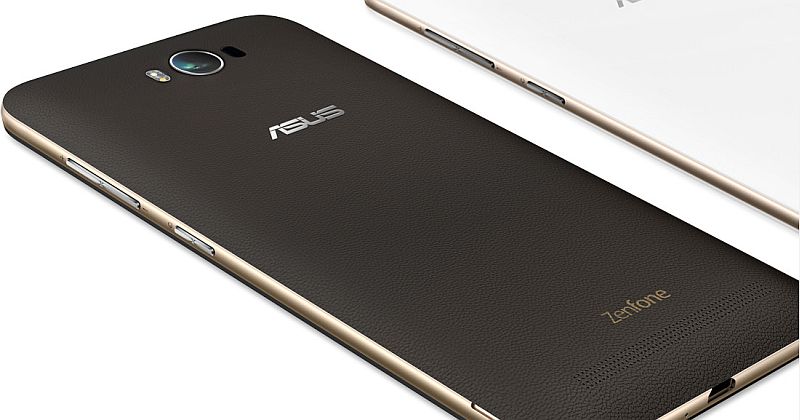
The smartphone offers a more powerful processor and comes in two memory variants with a 3GB RAM and a 2GB RAM priced at Rs 12,999 and Rs 9,999 respectively.The new ZenFone Max variants run Android 6.0.1 Marshmallow and has a built in memory of 32 GB.
The biggest plus point of the phone is its powerful 5000 mAh battery. The smartphone easily gives a battery backup of 2 to 3 days, depending upon the usage. A power saver mode has been installed in the phone, (which is common feature in most high-end smartphones) to adjust processor performance, screen brightness and restricts access to features that use up more battery.
Camera Quality
Zenfone Max comes with 13 Mega Pixel Laser Auto Focus camera with Dual color tone LED flash[Which helps to capture natural images in Flash]. With the combination of laser auto-focus a and Pixel Master technology, the primary camera can capture decent images indoor lighting condition but in outdoor lighting condition images are over exposure. The 5 MP front facing camera capable of capturing good selfies with beautification and HDR modes. Although this device has combinations of laser auto focus and 13 sensor, it doesn't make great camera but it can capture decent images.
Battery Life
This handset comes with 5000 mAh capacity battery which is not user replaceable battery. With regular usage it should easily make it through a couple of days before having charger. But, without fast charging support the 5000 mAh battery needs 4 hours to fully charging.
Asus Zenfone Max Specifications
Brand Asus
Model ID ZC550KL
Price INR.9,999
Network GSM[2G]/HSPA[3G]/LTE[4G]
Body Weight 202 g
Body Dimensions 77.5 x 156 x 10.55 mm
Sim Sim-Dual[4G+3G]
Type- Micro(Dual Stand-by)
Display Type- IPS LCD capacitive touchscreen with 16M colors
Size- 5.5 inches
Pixel Per Inch- (~267 ppi)
Resolution- 720 x 1280 HD Display
Multitouch- [Yes] Up to 10 Fingers
Protection Gorilla Glass 4 -Yes
Dragontrail Glass -No
Water Resistant -No
Body Material Plastic with non-metallic Frame
Operating System OS-Android
Version- v6
Mobile Engine Chipset-Qualcomm Snapdragon 615
CPU-Octa Core 1.5 GHz
Camera Primary Camera-13 MP AF with Dual tone LED flash
We Recommend this device if you want a good battery backup and a decent camera in this price segment. we give 9.4/10 score as it is a value for money device.
We all are always busy, so we don't get time to care for our belongings like Smartphoness, Watches etc. Here's list of some smartphones which is very usesul for working persons.
Disclaimer: Don't try to experiment with your smartphone's on the basis of this post. Smartphones are water resistant for particular time period and depth of exposure of water. We don't held any responsibility if any damage is caused to your device.
Latest release of the month is Motorola's Moto G4 Plus smartphone (XT1643). This latest tech beast is available on Amazon at price of Rs. 13,499.
Moto G4 Plus has sleek design and good build, vivid display, Strong battery life, latest version of Android and improved camera app.
Device has 5.50-inch touchscreen display with a resolution of 1080 pixels by 1920 pixels at a PPI of 401 pixels per inch. It measures 153.00 x 76.60 x 7.90 (height x width x thickness) and weighs 155.00 grams.
Device is available in two color variants Black and White.
This tech beast is powered by 1.5GHz octa-core Qualcomm Snapdragon 617 processor and it has 2GB of RAM. The Motorola Moto G4 Plus is a dual SIM (GSM and GSM) smartphone that accepts two Micro-SIM.
The phone has 128GB expandable memory with 16GB of internal storage.
The Motorola Moto G4 Plus has superb camera quality. It has 16-megapixel primary camera on the rear and a 5-megapixel front shooter camera for selfies.
The Motorola Moto G4 Plus runs latest version of android i.e. Android 6.0.1. It is powered by a 3000mAh non removable battery.
Connectivity options include Wi-Fi, GPS, Bluetooth (v 4.10), FM, 3G, 4G (with support for Band 40 used by some LTE networks in India).
Sensors on the phone include Proximity sensor, Ambient light sensor, Accelerometer, and Gyroscope.
Phone doesn’t have NFC. In low light camera performance is average. It does not have Compass, Barometer and Temperature Sensor.
What if we could use our phone just by squeezing it, i.e. we will squeeze our phone in particular pattern to dial different combination of numbers. In case of emergency now there is no need to open lock of smartphone and then dialing numbers or performing certain operation, now we can perform our task by not seeing smartphone also. A different pattern might turn the music on or flip a page on the screen.
Pushing the controls beyond tapping, swiping and voice commands, researchers in the US have come up with a way of making any phone pressure responsive, enabling you to control your phone with a squeeze. Developers of this technology are inspired by, The Dark Knight film, in which Batman uses smartphones to send high frequency sonar bursts.
Relying on the phone's existing hardware, ForcePhone software promises to bring the kind of pressure-sensitive control used in the iPhone 6s to any smartphone. ForcePhone offers new ways for people to command their mobile devices.
Earlier iPhone 6s has a force-sensing screen but the less expensive iPhone SE does not. No commercially available device has a pressure-sensitive body.
"You don't need a special screen or built-in sensors to do this. Now this functionality can be realized on any phone," said Kang Shin, the Kevin and Nancy O'Connor Professor of Computer Science in the U-M Department of Electrical Engineering and Computer Science. He further said, “We've augmented the user interface without requiring any special built-in sensors.”
ForcePhone works by using smartphone’s two fundamental sensors : Microphone and Speaker. The software sets the speaker to emit an inaudible tone at a frequency higher than 18 kHz, which is outside the range of human hearing. But the phone's mic can still pick up the vibration caused by the sound.
When a user presses on the screen or squeezes the phone's body in particular way then phone’s mic detect that and software respond to that input by calculating according to algorithm.
"Having expensive and bulky sensors installed into smartphones can solve every problem we have solved, but the added cost and laborious installation prevent phone manufacturers from doing it," Tung said. "Our sound-based solution can fill this gap, providing the functionality without making any hardware modification. Everything is just software."
Previously, Tung and Shin created BumpAlert, an Android application designed to warn distracted pedestrians of objects in their path, and EchoTag, which let phones tag and remember specific indoor locations and associate those places with certain modes or tasks.
The researchers will present their newest software, ForcePhone, in Singapore at MobiSys 2016, the Association for Computing Machinery's international mobile systems and applications conference on June 27-29.
RoBoHon is the world's first robotic mobile phone. It's concept is given by Sharp and engineer Tomotaka Takahashi, inventor of first robot astronaut 'Kirobo'. It is a smartphone which looks like a robot. RoBoHon, a pocket-size walking and dancing robot, started sale on Thursday in Japan at a starting price of 198,000 yen ($1,800 roughly Rs. 1.21 lakhs).
To mark the launch, and to let the users use it the Osaka-based company opened the RoBoHon Cafe in Tokyo where visitors can test the robot until June 7.
Sharp says it is a “phone you have never seen before… a phone in human shape.” The smartphone which looks like a Robot toy lets users check emails and other text on a screen at its back.
Special feature of phone is it can walk up to you when there is an incoming call, it can remind you of an important event, can be a standalone camera, project videos, photos or maps. RoBoHon is just fun to have around.
The Japanese electronics manufacturing company is producing 5,000 units per month. Company is aiming to be the leader of this type of mobile after sealing a takeover agreement with the Taiwanese company Hon Hai, also known as Foxconn, otherwise known for assembling iPhones and iPads for Apple.
RoBoHon's standing height is 19.5cm and weighing all of 390 grams, RoBoHoN supports various connectivity options LTE and Wi-Fi with 1.2GHz quad-core processor. Despite its large size, the display is a tiny 2-inch QVGA.
It also offers a wide range of applications based on conversation with the android.
RoBoHon can also recognise faces of people using its front camera and then address them by their name.
After Samsung and Xiaomi launched their flagship smartphone, now HTC will launch its flagship smartphone tomorrow i.e. May 26. This year Samsung had launched Samsung Galaxy S7, Galaxy S7 edge and Xiaomi had launched Xiaomi Mi 5 at the MWC 2016. It seems as if companies have been quick to bring their flagship smartphones to the Indian shores. Now HTC is all set to launch its latest flagship smartphone, HTC 10, in India tomorrow. HTC had already unveiled HTC 10 in Taiwan last month.
Key highlighted specifications of the smartphone are:
The smartphone has 5.2-inch QHD Super LCD 5 display covered with Corning Gorilla Glass protection.
It has Qualcomm’s Snapdragon 820 quad-core processor with 4GB of RAM for faster speed. It has expendable storage of upto 2TB (MicroSD) with inbuild storage of 32GB and 64GB.
Smartphone has 3,000mAh battery and Quick Charge 3.0 support.
Connectivity options on the smartphone include 4G LTE, Wi-Fi 802.11ac, NFC, Bluetooth 4.2, NFC and USB Type-C port for charging and data transfer.
In the photography department, the HTC 10 has 12-Ultrapixel rear camera of aperture f/1.8, optical image stabilization (OIS) and laser autofocus with 5-megapixel selfie camera with OIS.
It also supports 4K video recording capabilities. HTC 10 also supports 24-bit Hi-Res audio recording capabilities, which claims to capture up to 256 times more detail compared to standard recordings.
Device has unique metallic body design, physical home button embedded with a fingerprint scanner.
In the US, HTC 10 costs $699, which is approximately Rs 46,400, so it is expected to be available at around Rs 46,400 in India.
With the LG G5 available for pre-order at Rs 52,990 on Flipkart and the Samsung Galaxy S7 priced at Rs 48,990, it will be interesting to see how competitive HTC can get with its India pricing.
To know more about the device and launch event stay tuned with us.
The research tested the basic question: would processing the same information on a digital versus non-digital platform affect "construal levels"-- the fundamental level of concreteness versus abstractness that people use in perceiving and interpreting behaviors, events and other informational stimuli. In order to study the basic question of whether processing the same information on one platform or the other would trigger a different baseline "interpretive lens" or mindset that would influence construals of information, the research tried to hold as many factors as possible constant between the digital and non-digital platforms. Reading material and other content for the study for example, was published using the same print size and format in both the digital and non-digital (print) versions. The research was composed of four studies that evaluated how information processing is affected by each platform. A total of more than 300 participants, ages 20 to 24 years old, took part in the studies, which were composed of 60 to 100+ participants.
Reading comprehension and problem solving success were affected by the type of platform used. Highlights from the studies include the following:
Participants were asked to read a short story by author David Sedaris on either a physical printout (non-digital) or in a PDF on a PC laptop (digital), and were then asked to take a pop-quiz, paper-and-pencil comprehension test. For the abstract questions, on average, participants using the non-digital platform scored higher on inference questions with 66 percent correct, as compared to those using the digital platform, who had 48 percent correct. On the concrete questions, participants using the digital platform scored better with 73 percent correct, as compared to those using the non-digital platform, who had 58 percent correct.
Participants were asked to read a table of information about four, fictitious Japanese car models on either a PC laptop screen or paper print-out, and were then asked to select which car model is superior. Sixty-six percent of the participants using the non-digital platform (printed materials) reported the correct answer, as compared to 43 percent of those using the digital platform.
Triggering a more abstract mindset prior to an information processing task on a digital platform appeared to help facilitate a better performance on tasks that require abstract thinking. Specifically, 48 percent of participants reported the correct answer to the Japanese car judgement task after completing a priming activity intended to activate a high-level of construal in which they were tasked to take on an abstract mindset, as compared to the 30 percent, who answered correctly without the priming activity.
The research was conducted by Dartmouth's Tiltfactor lab, an interdisciplinary innovation studio that designs and studies games for social impact, and was led by Geoff Kaufman, an assistant professor at the Human-Computer Interaction Institute at Carnegie Mellon University, who was a postdoctoral researcher in psychology at Tiltfactor at the time of the study; and Mary Flanagan, Sherman Fairchild Distinguished Professor in Digital Humanities at Dartmouth and founding director of Tiltfactor.
"There has been a great deal of research on how digital platforms might be affecting attention, distractibility and mindfulness, and these studies build on this work, by focusing on a relatively understudied construct," said Geoff Kaufman. "Given that psychologists have shown that construal levels can vastly impact outcomes such as self-esteem and goal pursuit, it's crucial to recognize the role that digitization of information might be having on this important aspect of cognition," he added.
The study on digital versus non-digital platforms was prompted by earlier research by the co-authors, which revealed that players of the digital version of the public health strategy game, "POX: Save the People®," were more inclined to respond with localized solutions, rather than looking at the big picture.
"Compared to the widespread acceptance of digital devices, as evidenced by millions of apps, ubiquitous smartphones, and the distribution of iPads in schools, surprisingly few studies exist about how digital tools affect our understanding -- our cognition. Knowing the affordances of digital technologies can help us design better software," said Mary Flanagan. "Sometimes, it is beneficial to foster abstract thinking, and as we know more, we can design to overcome the tendencies -- or deficits -- inherent in digital devices," added Flanagan.
The smartphone industry till few years ago was dominated by Nokia, LG and Sony. But with the arrival of Google's android whole scene has changed. Now, Samsung and Apple emerged as the strongest players in the smartphone segment.
However, while Apple and Samsung still rule the industry there are other key players too, having the potential to upset the party for the two tech giants anytime.
Here are the 5 biggest smartphone brands of the world, as per a research by Gartner. Note: The ranking is based on the global sales of smartphones in the first quarter of 2016.
1. SAMSUNG
Samsung is a South Korean smartphone manufacturing company. Samsung also produce other household products like AC, Washing Machine, Refrigerator etc. Samsung rules the market in first quarter of 2016 with 81,186,900 units sold. The company held 23.2% market share, marginally down from 24.1% it held during the same quarter last year.
The company extended its lead over Apple during the first quarter. According to Gartner's research director Anshul Gupta, "Samsung's Galaxy S7 series phones and renewed portfolio positioned it as a strong competitor in the smartphone market, and more so in the emerging markets where it has been facing fierce competition from local manufacturers."
2. APPLE
Although Apple managed to retain its second position in the smartphone market, still company has suffered loss in double-digit. Apple has double digit decline year on year, with iPhone sales down by 14%.
Apple is still planing to recover this loss by exploring ways to refarm second-hand iPhones coming through the program in emerging markets.
3. HUAWEI
At no. 3 position is Chinese smartphone maker Huawei. Huawei major markets cover China, Europe, the Americas and Africa.
In first quarter of year 2016 company has sold 28,861,000 units to stand at 3rd position. according t Huawei’s market share during the quarter stood at 8.3%.
4. OPPO
Oppo had the best performance in the first quarter of 2016, with unit sales growing by 145%. Like Huawei and Xiaomi, Oppo saw strong growth in China, taking share from other players like Lenovo, Samsung and Yulong.
The company’s smartphone sales in the emerging Asia-Pacific region rose by 199%, with 16,112,600 units sold during the quarter.
5. XIAOMI
At no. 5 is Chinese smartphone maker Xiaomi. Just like Huawei and Oppo, Xiaomi too witnessed strong growth in China. The company also experienced good demand for its smartphones in the emerging Asia-Pacific region.
The company's total smartphone unit sales during the quarter stood at 15,048,000 units. Its global market share during the year stood at 4.3%.
To extract scientist within us Google has launched a new app that turns our phone into a powerful little research lab. The app calledScience Journal, uses the sensors in phone to measure and record data in real time, including movement, light and sound.
With this app Google has once again proved that smartphone is not only about games, Whatsapp etc, Smartphone can be much more than that. The Android app puts a research lab in our pocket, making it possible to use smartphone’s sensors in ways that may not otherwise be readily accessible. As well, Science Journal can be used to store observational notes, generate graphs, and more.
In 3 words we can describe Google’s Science Journal as ‘doing science simple.’
The app uses tools like phone’s ambient light sensor for light intensity comparisons. App also let user measures how loud a noise is and comparing it to other noises, and recording other things from environment.
We can also add our own photos and notes to our projects, adding extra details or reminders for our future self. When we add data, the app will generate graphs of it in real time, which we can use to compare the data to the results from other projects. The app uses sensors we’ll find on our phone like accelerometer, microphone, and such.
To help kids get started with their own science experiments in these summer breaks, Google has partnered with exploratorium to create“getting started” activities, guiding users through light and audio investigations, using Science Journal with physical devices to record data (wind spinners, in this case), and how to record motions. The app is available now on Google Play Store.
Smartron, a new city-based technology firm, launched its second product, new smart mobile phone, ‘tphone’. First product of Smartron was Smartron Tbook which was launched at the end of financial year in March. With this launch Smartron is trying to expand the product base of its technological ecosystem, ‘tronx’.
Telangana IT Minister K. Taraka Rama Rao with Smartron's brand ambassador Sachin Tendulkar after unveiling 'tphone' in Hyderabad on Thursday.
Smartron has all latest features at the price of Rs.22,999. It has latest android operating system Marshmallow with 64-bit Qualcomm Snapdragon processor, octacore CPU, and 4GB RAM with display of 5.5 inch.
Device is promoted for the seamless connectivity among wide variety of devices and electronic goods which will soon be part of the ‘t-home’ experience.
Legendary cricketer Sachin Tendulkar is brand ambassador of Smartron and strategic shareholder. Sachin Tendulkar along with Telangana Minister for Information Technology K.T. Rama Rao unveiled the mobile phone in Hyderabad on Thursday.
Founder-Chairman of Smartron, Mahesh Linga Reddy advertised the phone as “totally designed and engineered in India”, and informed that soon manufacturing of phones will be shifted to India. Mr. Reddy also revealed plans to launch the phone in Middle East, Russia and South East Asia.
Sachin Tendulkar, speaking on the occasion said, “Being the Skill India campaigner, I welcome the product which is totally engineered and designed in India.” Mr. Tendulkar said.
Mr. Rama Rao assured his support to the company, and expressed hope that more globally competitive products will emerge from the city-based ventures.
uder Finn Asia created INSIGHT to address growing client needs for a dedicated team to provide market intelligence. INSIGHT delivers incisive research and analysis that helps clients understand macro trends in political and social areas of the country where they operate.
we launched SONAR, a proprietary multi-language, multi-market, multi-channel social media crisis simulation platform that allows clients to experience a fast-de- veloping social media issue in real time.